Dual-Layer Intelligent Weighbridge System: The Future of Smart Weighbridge Automation in India
Discover EMERSIT's Dual-Layer Intelligent Weighbridge System combining AI-powered monitoring, RFID, ANPR, and automated truck weighing for smarter industrial operations, fraud prevention, and compliance management in India.
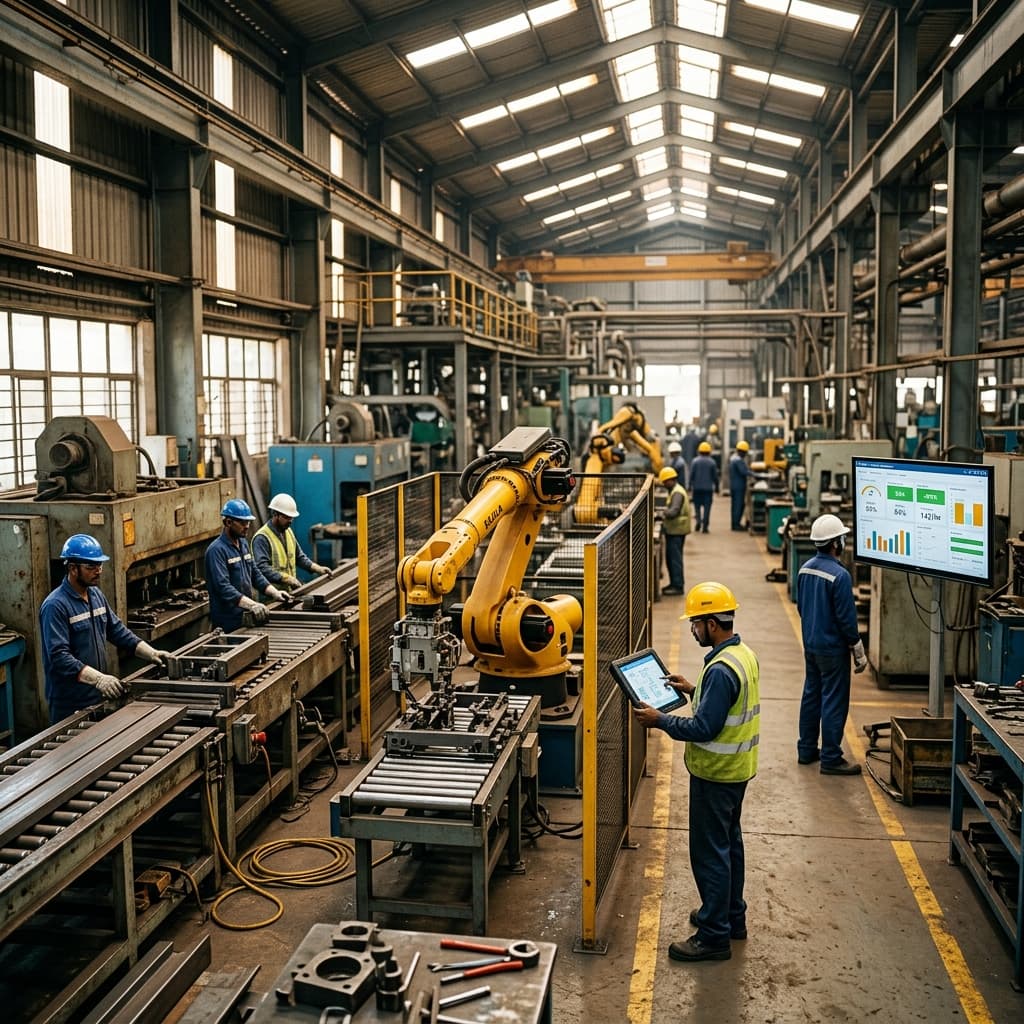
Industrial operations across India depend heavily on accurate vehicle weighing for logistics management, dispatch control, inventory tracking, taxation, billing, and compliance. Across industries such as mining, cement, steel, logistics, ports, manufacturing, and agriculture — even small inaccuracies in truck weight measurement can lead to major financial losses, operational inefficiencies, and compliance risks.
A weighbridge is an industrial vehicle weighing system used to measure the weight of trucks, trailers, tankers, and heavy commercial vehicles. Traditionally, truck weighing machines relied primarily on load cells and axle-pad systems to calculate axle load and Gross Vehicle Weight (GVW). While these systems provide certified weight measurement, modern industrial environments now demand much more than basic weighing accuracy.
Industries are rapidly moving toward intelligent weighbridge automation systems capable of improving transparency, reducing manual dependency, detecting manipulation, and delivering real-time operational visibility. This transformation is driving the adoption of AI-powered smart weighbridge systems across India — and it is reshaping how organizations from mining operations to traffic enforcement think about weight compliance.
What is a Dual-Layer Intelligent Weighbridge System?
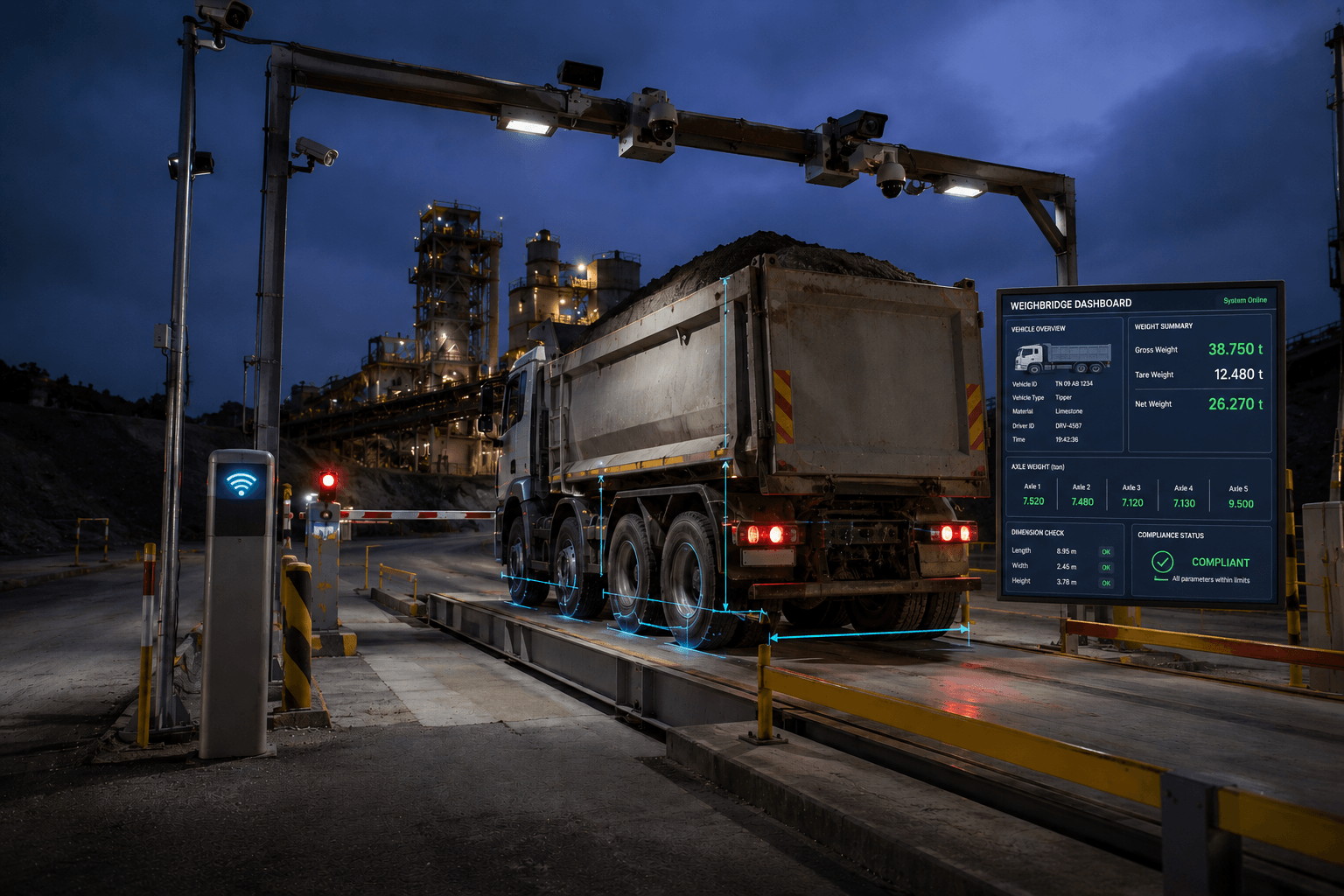
EMERSIT's Dual-Layer Intelligent Weighbridge System is an advanced weighbridge automation solution designed to combine certified physical weighing infrastructure with AI-powered vehicle analysis and digital monitoring technologies. Unlike conventional truck weighing machines, the system introduces a dual-verification architecture that enhances operational accuracy, fraud detection, and compliance management.
01Layer 1 — Certified Physical Weighing
- Approved load cells and axle-pad sensors
- Calculates actual axle load and GVW
- Legally accepted weight measurement
- Tamper-evident hardware seals
- Integration with government e-challan systems
02Layer 2 — AI-Powered Vehicle Analysis
- Smart cameras with computer vision
- Suspension sag and chassis height analysis
- Axle positioning and body tilt detection
- AI-estimated load cross-verification
- Real-time anomaly and fraud flagging
The system cross-verifies both measurements in real time to identify overload conditions, axle manipulation, wheel misalignment, partial-pad fraud, and suspicious operational anomalies. This intelligent verification model creates a highly secure and tamper-resistant automated truck weighing system for industrial environments — a level of confidence that single-layer physical systems simply cannot provide.
Why Traditional Weighbridge Systems Are No Longer Enough
Traditional weighbridge systems were designed for manual industrial operations where physical supervision and paper-based workflows were common. However, as industries move toward digital infrastructure and Industry 4.0 adoption, conventional systems are struggling to meet modern operational requirements.
- Wheel misalignment fraud: Vehicles positioned incorrectly on the weighing platform — intentionally or otherwise — affect axle load accuracy. Physical sensors alone cannot flag this.
- Partial-pad manipulation: Only part of an axle is placed on the platform to reduce recorded weight. This is one of the most common forms of weighbridge fraud in Indian logistics.
- Manual dependency risk: Human-operated weighbridges face data entry errors, delayed approvals, unauthorized overrides, and poor audit trails.
- No real-time intelligence: Traditional systems generate a weight ticket but cannot detect patterns of suspicious behavior, repeated anomalies, or overload trends over time.
- No identity verification: Without RFID or ANPR, the same vehicle can enter under different identities on different trips, enabling systematic dispatch fraud.
Key Insight
Industry estimates suggest that weighbridge fraud and inaccurate truck weighing cost Indian logistics and mining sectors thousands of crores annually through under-declared loads, tax evasion, and infrastructure damage from overloaded vehicles.
How the Smart Weighbridge System Works
Physical Weight Measurement Layer
The first layer uses certified physical weighing infrastructure — load cells, axle pads, and approved weighbridge sensors — to calculate the actual axle load and Gross Vehicle Weight. This remains the legally accepted and certified weight measurement mechanism recognized by tax and transport authorities across India. Our Automation & System Integration team ensures these sensors are calibrated to legal metrology standards and integrated with digital dispatch workflows from day one.
AI-Powered Vehicle Analysis Layer
The second layer introduces AI-powered vehicle posture analysis using smart cameras and computer vision. The AI engine studies multiple parameters including suspension compression, chassis height, axle positioning, truck alignment, body tilt, and overall vehicle posture to estimate the expected vehicle load. By comparing AI-estimated weight with actual physical weight, the system identifies operational anomalies and potential manipulation attempts instantly.
This approach draws from the same computer-vision technology used in AI for Industry 5.0 applications — where visual analysis of physical assets enables predictions that sensor data alone cannot support. When both layers produce consistent readings, the transaction is cleared automatically. When they diverge beyond a configurable threshold, the system flags the vehicle for supervisor review before the ticket is issued.
Real-Time Fraud Detection and Monitoring
The platform continuously tracks vehicle activity and analyzes operational behavior through real-time dashboards and intelligent monitoring. Unlike traditional systems that generate a weight ticket and move on, EMERSIT's solution builds a behavioral record for each vehicle, driver, and route — detecting patterns that single-transaction review would miss.
Overload Detection
Flags vehicles exceeding legal axle load limits before they exit the facility, preventing road damage and regulatory fines.
Partial-Pad Fraud Alert
AI camera detects when only part of an axle rests on the pad and raises an immediate mismatch alert.
Wheel Misalignment
Computer vision confirms proper vehicle positioning before recording the weight — eliminating a major source of inaccuracy.
Anomaly Scoring
Each transaction is scored against historical baselines. Vehicles with repeated anomalies trigger escalated review workflows.
RFID and ANPR Integration for Automated Operations
RFID Weighbridge System
The RFID weighbridge system automates vehicle identification and entry management. Vehicles fitted with RFID tags are automatically recognized during entry and exit without requiring manual verification. This reduces queue time, improves dispatch speed, and eliminates the scope for identity substitution fraud. When combined with the Visitor Management System logic we apply to facility access control, RFID-based weighbridge automation creates a closed, auditable loop from gate entry to dispatch.
ANPR Weighbridge System
The ANPR (Automatic Number Plate Recognition) system uses optical character recognition and computer vision to capture and verify vehicle registration details automatically. Every transaction records the vehicle's number plate, entry and exit timestamp, driver identity, vehicle type, and dispatch details — creating an immutable audit trail that supports GST compliance, transport documentation, and security investigations.
99.9%
Weight Data Accuracy
4×
Faster Vehicle Processing
0
Disputed Load Transactions
100%
Digital Audit Trail
Where Dual-Layer Weighbridge Systems Create Real Value
The intelligent weighbridge model is not limited to a single industry. Its combination of certified physical weighing, AI verification, RFID identity management, and digital monitoring makes it applicable wherever vehicle weight accuracy and operational accountability are critical.
Mining and Mineral Operations
Mining is perhaps the highest-stakes environment for weighbridge fraud. Ore transportation involves high-value loads, long haulage distances, and multiple contractor vehicles that are difficult to supervise manually. Dual-layer verification ensures every truck's declared load matches its actual physical weight — preventing systematic under-declaration of ore quantities that leads to royalty shortfalls for mine operators and revenue leakage for the state. Automated RFID tracking also helps mine operators enforce dispatch schedules and detect unauthorized vehicle movements.
Traffic Police and Highway Enforcement
Overloaded commercial vehicles are one of India's largest contributors to highway infrastructure damage and road accidents. The Ministry of Road Transport has been mandating electronic weighing infrastructure at key highway checkpoints, but traditional enforcement stations depend heavily on manual operation and paper-based processing. An intelligent weighbridge system at highway checkpoints enables automated overload detection, real-time e-challan generation, ANPR-based vehicle history lookup, and centralized monitoring from a traffic control center — transforming enforcement from a manual, corruption-prone process into a data-driven, transparent system. This aligns directly with Smart City and Digital India infrastructure modernization objectives.
Warehousing and Logistics Hubs
In warehouse and logistics operations, inbound material weight directly determines inventory valuation, supplier payment, and GST input credit. Outbound weight determines billing, freight costs, and delivery accountability. Manual weighing processes in busy dispatch yards introduce delays, errors, and opportunities for collusion between drivers and weighbridge operators. Automated RFID entry, AI-verified weighing, and digital ticket generation eliminate the human bottleneck — processing vehicles faster while producing a tamper-resistant record of every transaction. Integration with ERP and dispatch systems ensures weight data flows directly into inventory and billing without manual re-entry.
Cement and Building Materials Plants
Cement plants process hundreds of trucks daily for inbound raw materials (limestone, gypsum, fly ash) and outbound finished product. Weighbridge throughput is a direct operational bottleneck — slow processing times create queues that delay dispatch and increase demurrage costs. Intelligent weighbridge automation reduces vehicle processing time significantly while simultaneously improving load accuracy. For large cement groups operating multiple plants, centralized digital monitoring provides dispatch visibility across the entire network from a single dashboard.
Steel and Metal Industries
Steel plants receive high-value scrap, coal, iron ore, and other inputs by road and rail, and dispatch finished coils, billets, and sections to OEM customers with strict weight specifications. Any deviation between declared and actual weight — whether accidental or intentional — creates billing disputes, customer complaints, and supply chain accountability issues. The dual-layer system's AI verification gives steel operations the confidence to automate weight-based billing with full traceability, supporting the kind of traceability and smart manufacturing infrastructure that automotive OEM customers increasingly require from their suppliers.
Ports and Container Terminals
Ports are legally required under SOLAS (Safety of Life at Sea) regulations to verify the Verified Gross Mass (VGM) of every container before loading. Manual weighbridge operations at busy port gates create severe congestion and documentation delays. ANPR-integrated weighbridge automation enables containers to be processed without stopping — RFID or number plate recognition triggers automatic weight capture, VGM certificate generation, and ERP update, dramatically improving gate throughput and SOLAS compliance documentation.
Agriculture and Mandi Operations
Agricultural procurement centers (mandis) weigh large volumes of produce from farmers for government procurement and market transactions. Weighbridge integrity is critical for fair price delivery to farmers — disputes over weight records directly affect farmer income and government procurement credibility. Digital weighbridge systems with AI verification and RFID-based farmer identity management create transparent, auditable records that protect both farmers and government procurement agencies from manipulation.
Waste Management Facilities
Municipal and industrial waste facilities charge for disposal by weight. Manual weighbridge operations in these environments are susceptible to systematic under-reporting of waste quantities, reducing revenue for facility operators and creating compliance gaps. Automated weighing with digital records improves revenue accountability and supports environmental compliance reporting requirements.
Benefits of Intelligent Weighbridge Automation
Improved Accuracy and Transparency
Dual-verification combines certified physical weighing with AI validation, building trust in every weight record across suppliers, customers, and regulators.
Reduced Labour Dependency
Entry management, vehicle identification, weight recording, ticket generation, and reporting are automated — reducing staffing costs and removing the human element from fraud risk.
Faster Vehicle Processing
Automation eliminates manual approvals and processing delays, improving fleet turnaround time and dispatch speed — directly impacting logistics cost.
Better Fraud Prevention
Overload manipulation, partial-pad fraud, axle positioning errors, and suspicious behavioral patterns are detected in real time before tickets are issued.
Enhanced Compliance Management
Digital audit trails improve GST reporting, logistics accountability, operational transparency, and legal compliance documentation. For industries operating under environmental compliance frameworks — where weight records support emission factor calculations or waste disposal reporting — the immutable digital record created by an intelligent weighbridge system directly supports audit readiness. This connects to the broader compliance infrastructure that EMERSIT builds through our Transformation & Compliance Advisory practice.
Enterprise AI Weighbridge Software and System Integration
Modern industrial operations require connected infrastructure rather than isolated systems. A weighbridge that generates weight tickets without feeding that data into ERP, dispatch, inventory, and compliance systems is only solving half the problem. EMERSIT's weighbridge automation solution supports integration with:
- ERP systems (SAP, Oracle, Tally) — Weight data flows directly into inventory receipts, goods issue, and billing without manual re-entry
- Dispatch and logistics software — Automated dispatch confirmation when weight is verified and ticket generated
- Gate automation systems — Boom barriers and RFID readers trigger automatically based on system authorization
- Cloud monitoring platforms — Centralized dashboard for multi-location operations monitoring all weighbridge activity in real time
- Government e-challan and VAHAN integration — Vehicle registration verification and compliance documentation linked to national transport databases
- [Digital twin infrastructure](/blogs/digital-twin-indian-manufacturing) — Weighbridge data as an input to broader operational intelligence and predictive logistics models
The Future of Weighbridge Automation in India
The future of weighbridge automation in India will be shaped by artificial intelligence, IoT connectivity, predictive analytics, cloud infrastructure, and automated compliance systems. Several trends will define the next generation of intelligent weighing infrastructure:
- 1AI-based overload prediction — Models trained on vehicle registration data, route history, and cargo type will predict overload risk before the vehicle arrives at the weighbridge, enabling proactive enforcement
- 2Remote operational monitoring — Multi-plant organizations will centralize weighbridge monitoring across all locations on a single cloud dashboard, with alerts for anomalies at any site
- 3Predictive anomaly detection — Machine learning models will identify behavioral patterns across thousands of transactions — detecting systematic fraud that is invisible in individual transaction review
- 4Integration with drone and satellite logistics — As last-mile delivery technology evolves, weighbridge systems will integrate with aerial and autonomous delivery tracking for complete load chain accountability
- 5Smart compliance reporting — Automated generation of VAHAN, PCB waste manifests, GST e-way bill data, and government procurement reports directly from weighbridge transaction records
Industries adopting intelligent weighbridge systems today will gain long-term advantages in operational efficiency, fraud prevention, logistics optimization, and digital transformation readiness — particularly as India's National Logistics Policy pushes for end-to-end digitization of freight movement and weight compliance. The alignment with AI for Industry 5.0 and smart industrial automation trends makes investment in intelligent weighbridge infrastructure a foundational step rather than an optional upgrade.
How EMERSIT Supports Weighbridge Automation
EMERSIT designs and deploys end-to-end intelligent weighbridge systems — from hardware selection and civil integration through AI camera configuration, RFID/ANPR setup, ERP integration, operator training, and ongoing monitoring. Our proven deployment demonstrates the architecture in production at an industrial facility, giving new clients a reference implementation rather than a theoretical proposal.
The Dual-Layer Intelligent Weighbridge System is available as a turnkey deployment or as a modular upgrade to existing weighbridge infrastructure — allowing organizations to add AI verification and ANPR capabilities to existing load-cell systems without replacing the physical weighing layer. Our Traceability & Smart Manufacturing practice ensures the weighbridge sits within a broader operational intelligence framework rather than operating in isolation.
Ready to transform your weighbridge operations?
EMERSIT helps industrial organizations deploy intelligent, fraud-resistant weighbridge automation with AI verification, RFID/ANPR integration, and real-time compliance monitoring.
Book a ConsultationFrequently Asked Questions
Q1. What makes a Dual-Layer Weighbridge different from a standard automated weighbridge?
A standard automated weighbridge automates the recording and ticketing process but still relies entirely on load-cell sensor data. The Dual-Layer system adds an AI-powered second verification layer using computer vision — analyzing vehicle posture, suspension sag, axle positioning, and chassis height to cross-check the physical weight reading. Any significant mismatch between the two layers triggers an alert before the ticket is issued, making manipulation far harder to execute undetected.
Q2. Can the system be used by traffic police for highway overload enforcement?
Yes. The system's ANPR capability, automated overload detection, and e-challan integration make it well-suited for highway enforcement checkpoints. Traffic authorities can monitor all transactions remotely from a control center, receive real-time overload alerts, and generate enforcement documentation automatically — eliminating the manual bottleneck at enforcement stations and reducing opportunities for corruption.
Q3. Can the Dual-Layer system be added to an existing weighbridge installation?
Yes. The AI camera layer and RFID/ANPR systems can be retrofitted to existing load-cell weighbridges without replacing the physical infrastructure. EMERSIT assesses the existing installation and designs a modular upgrade path that adds digital intelligence without requiring a full civil or hardware replacement.
Q4. How does ANPR integration work with government vehicle databases?
The ANPR system captures the vehicle number plate at entry and exit and can cross-reference it against the VAHAN national vehicle registration database for ownership verification, fitness certificate status, and permit validity. This integration helps identify unauthorized vehicles, expired permits, and registration mismatches in real time.
Q5. What ERP systems can the weighbridge solution integrate with?
EMERSIT's weighbridge automation solution supports integration with SAP, Oracle, Tally, and custom ERP platforms via standard APIs. Weight transaction data is pushed directly into goods receipt, inventory, dispatch, and billing modules — eliminating manual data entry and the errors and delays it introduces.
Q6. How does the system help with GST and compliance documentation?
Every weighbridge transaction generates a digital record that includes vehicle identity, timestamp, weight measurement, ANPR image, and AI verification status. This record supports GST e-way bill compliance, logistics documentation, environmental waste manifests, and government procurement audit requirements — reducing the manual effort of compliance documentation significantly.